



Schweißmontage-Schmiedeteile
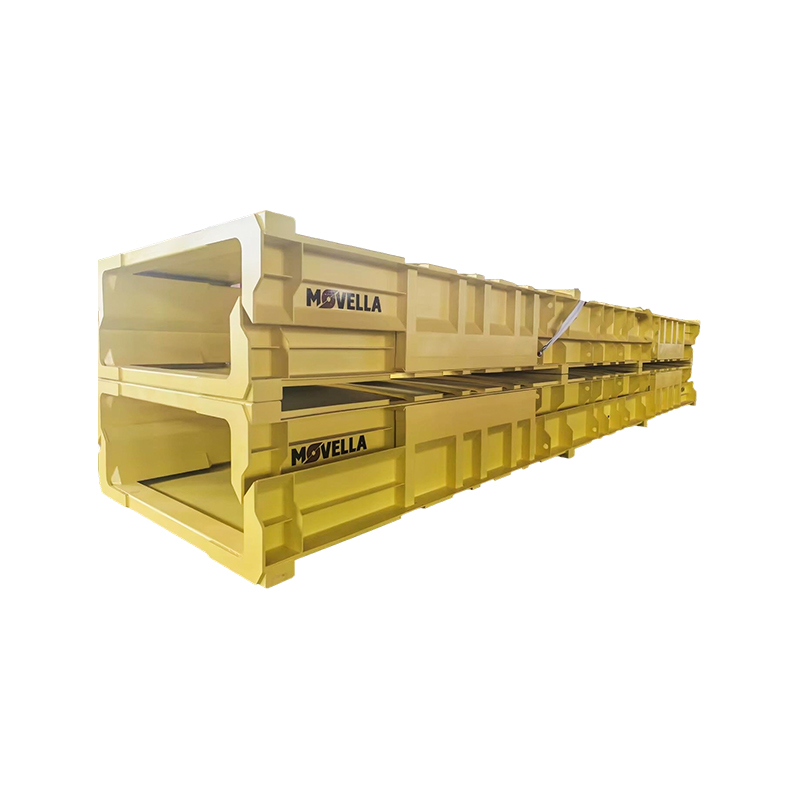

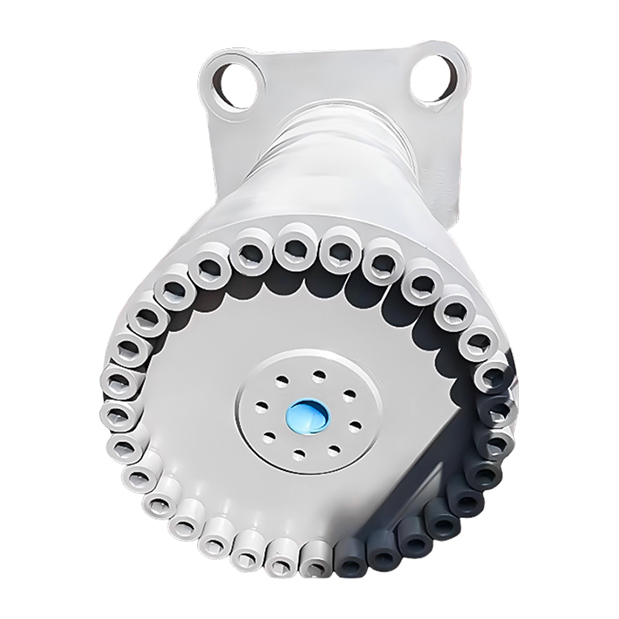
ACE Group is a comprehensive enterprise group focused on the heavy industrial manufacturing sector, serving as a China Schweißfertigung Manufacturers and Schweißfertigung Factory. Its business spans forging, heat treatment, precision machining, welded structures, and heavy-duty power & free chain spraying production. This integrated layout covers the core production processes of the industrial machinery industry, combining technological strength with large-scale production capabilities.
Details zu den wichtigsten Tochtergesellschaften:
Jiangsu ACE Energy Technology Co., Ltd.: Die Kernproduktionsbasis der Gruppe nimmt offiziell im November 2025 den Betrieb auf. Sie umfasst 55 Hektar mit einer Gesamtgrundfläche von mehr als 50.018 Quadratmetern. Die Fabrik ist mit 3-Tonnen-, 5-Tonnen- und 15-Tonnen-Elektrohydraulikhämmern ausgestattet; 1-Meter- und 1,5-Meter-Vertikal-Ringwalzmaschinen; energieeffiziente Erdgasheizöfen; Wärmebehandlungs-Widerstandsöfen; Abschrecktanks; Induktionshärtungsgeräte; Bearbeitungszentren; und andere Produktionsanlagen.
Yancheng ACE Machinery Co., Ltd.: Es wurde 2019 gegründet und umfasst 20 Hektar mit einer Grundfläche von 13.333 Quadratmetern. Das Unternehmen verfügt über eine integrierte Produktionslinie zum Schweißen und Richten von Baustahl sowie über eine Präzisionsbearbeitungswerkstatt.
Yancheng ACE Oberflächenbehandlungstechnologie Co., Ltd.: Betreibt eine Hochleistungs-Produktionslinie für großflächige Pulverbeschichtung mit Power & Free Chain. Mit dem Schwerpunkt auf professioneller Oberflächenbehandlungstechnologie erreicht die einmalige Beschichtungsdicke 400 μm und bietet zuverlässige Korrosionsschutz- und wetterbeständige Schutzleistung sowie Lösungen zur Optimierung des Erscheinungsbilds und verbessert die Produktdienstleistungen der Gruppe über den gesamten Lebenszyklus.
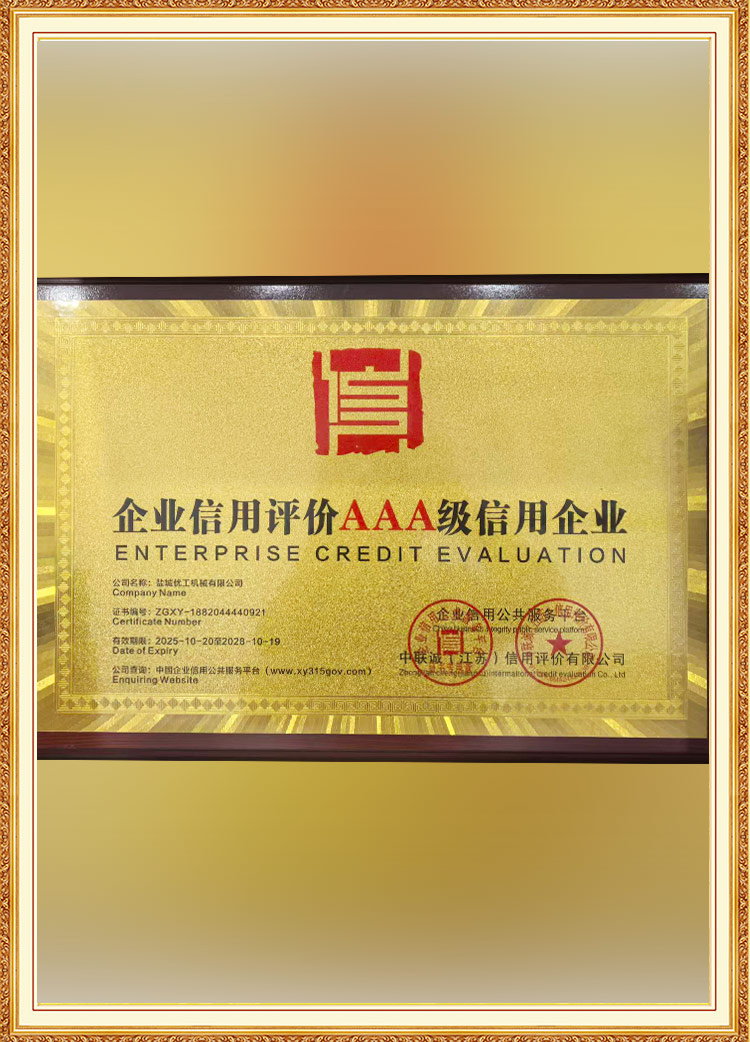
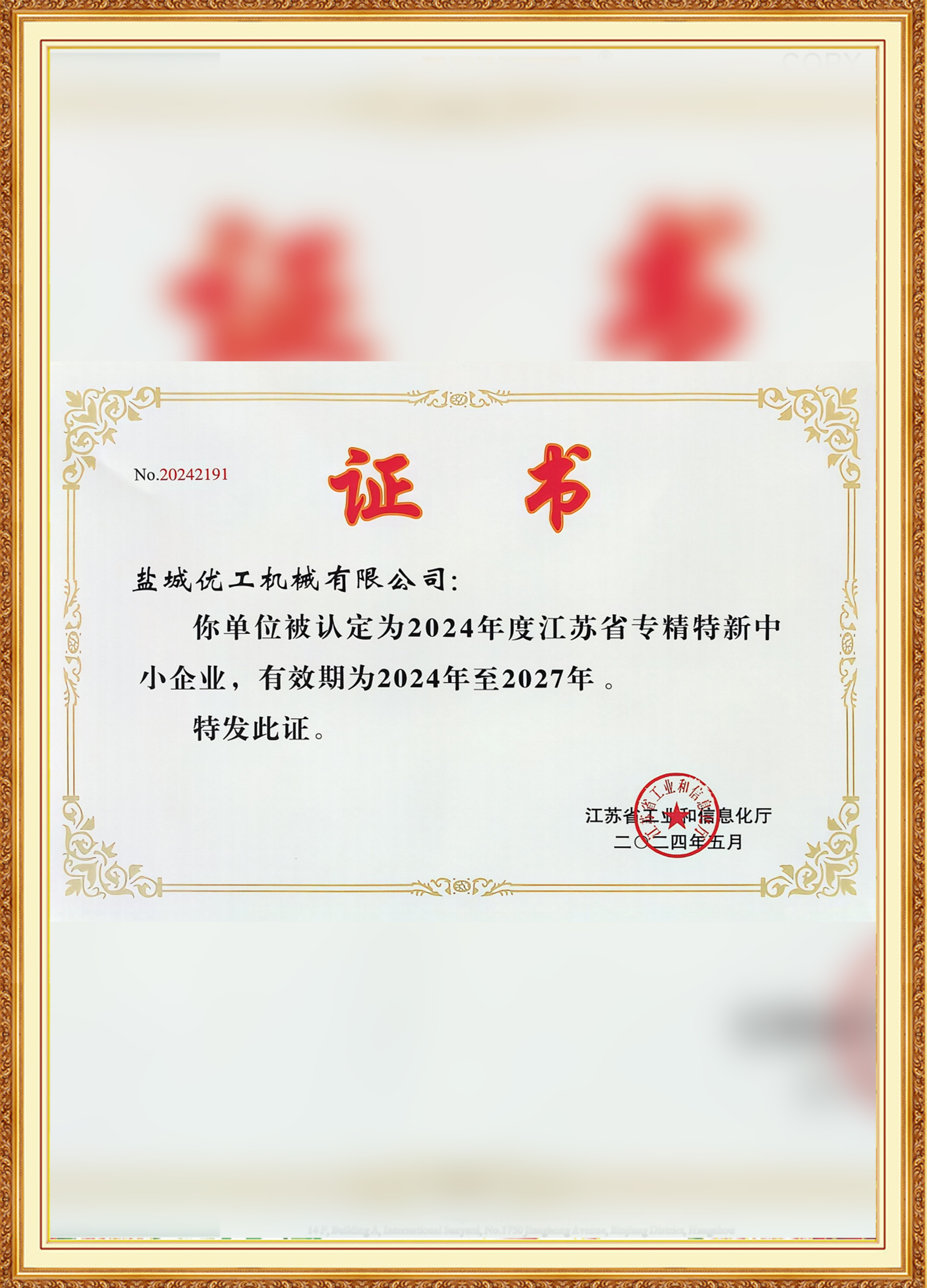
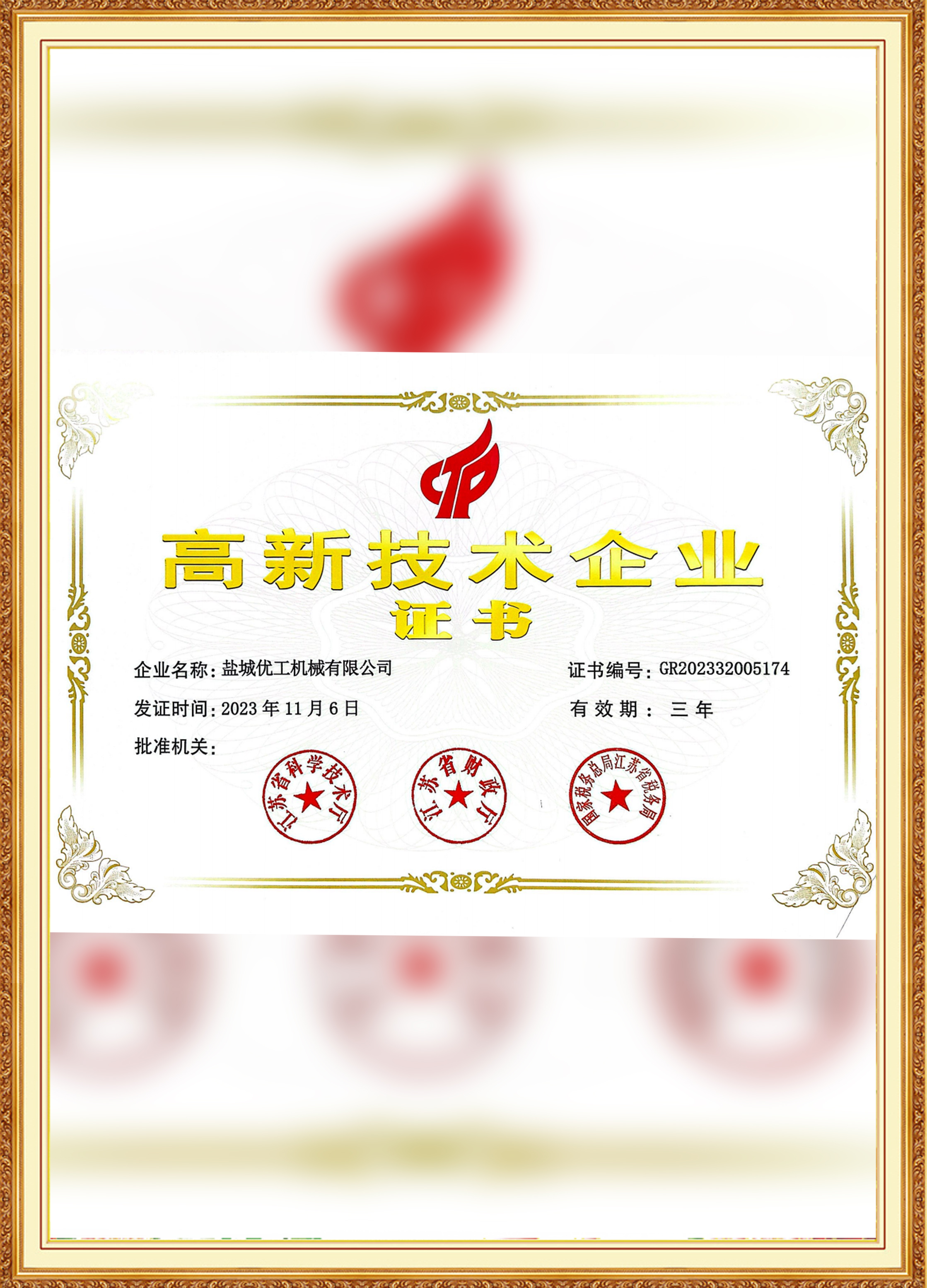
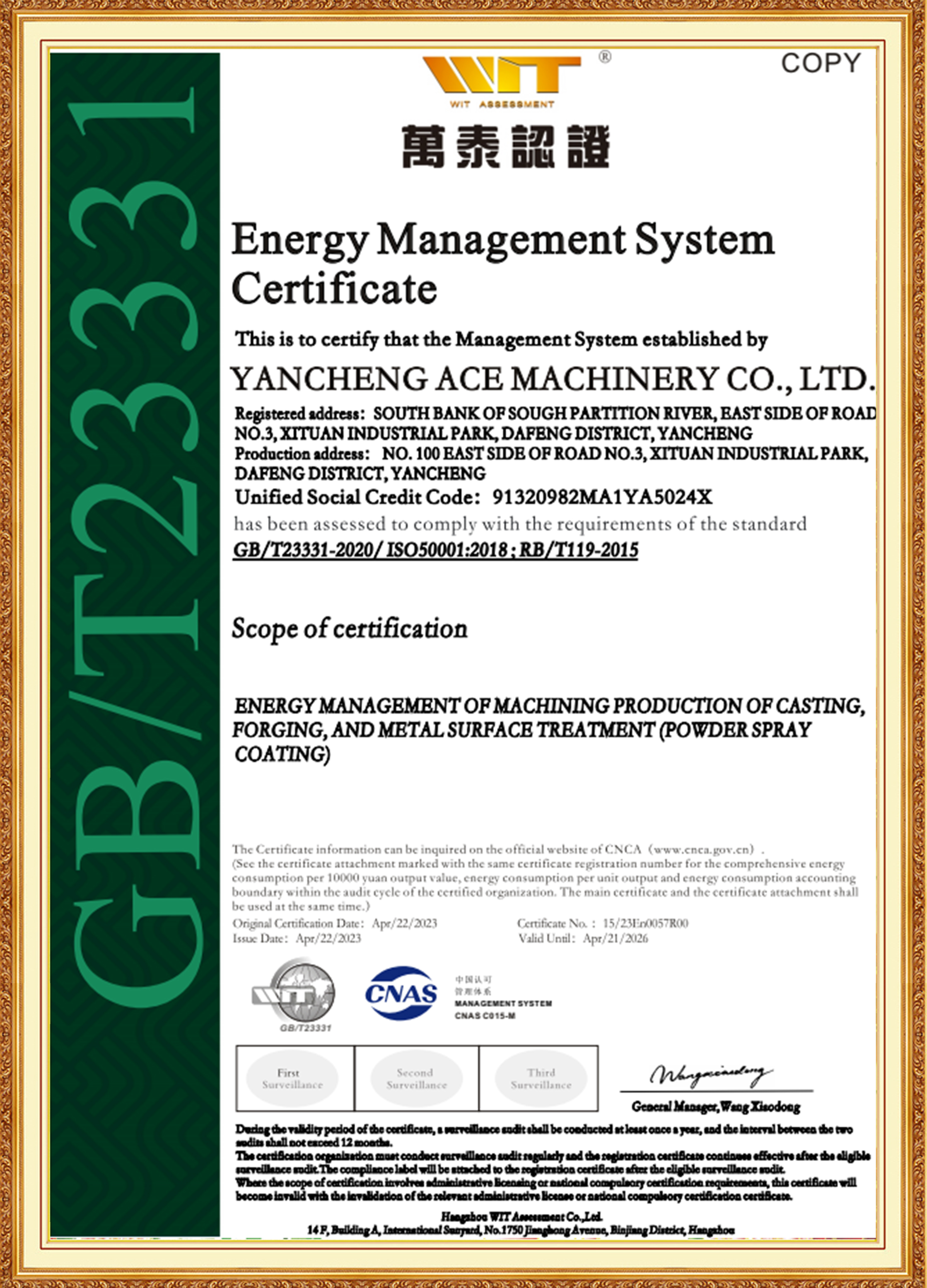
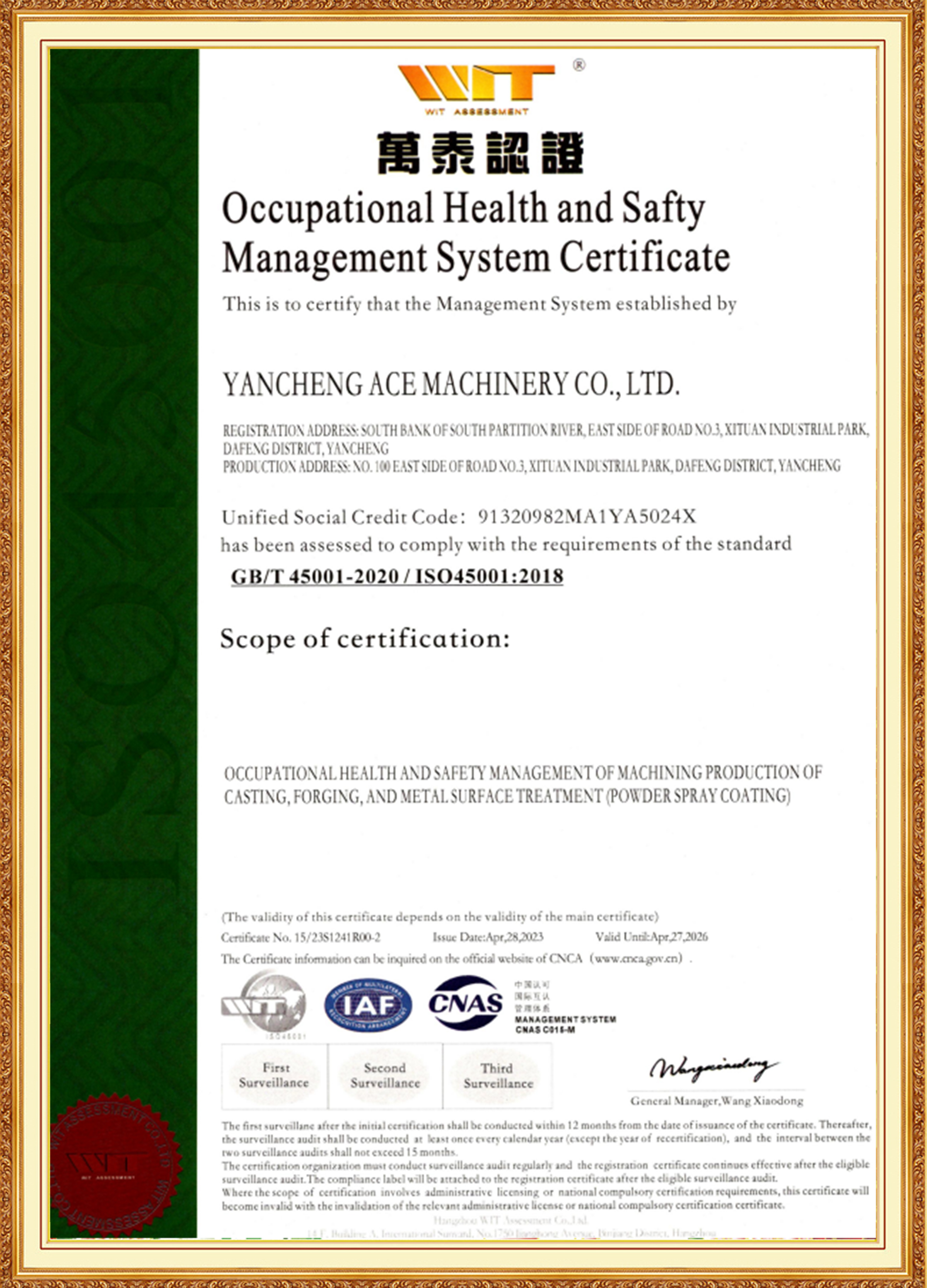
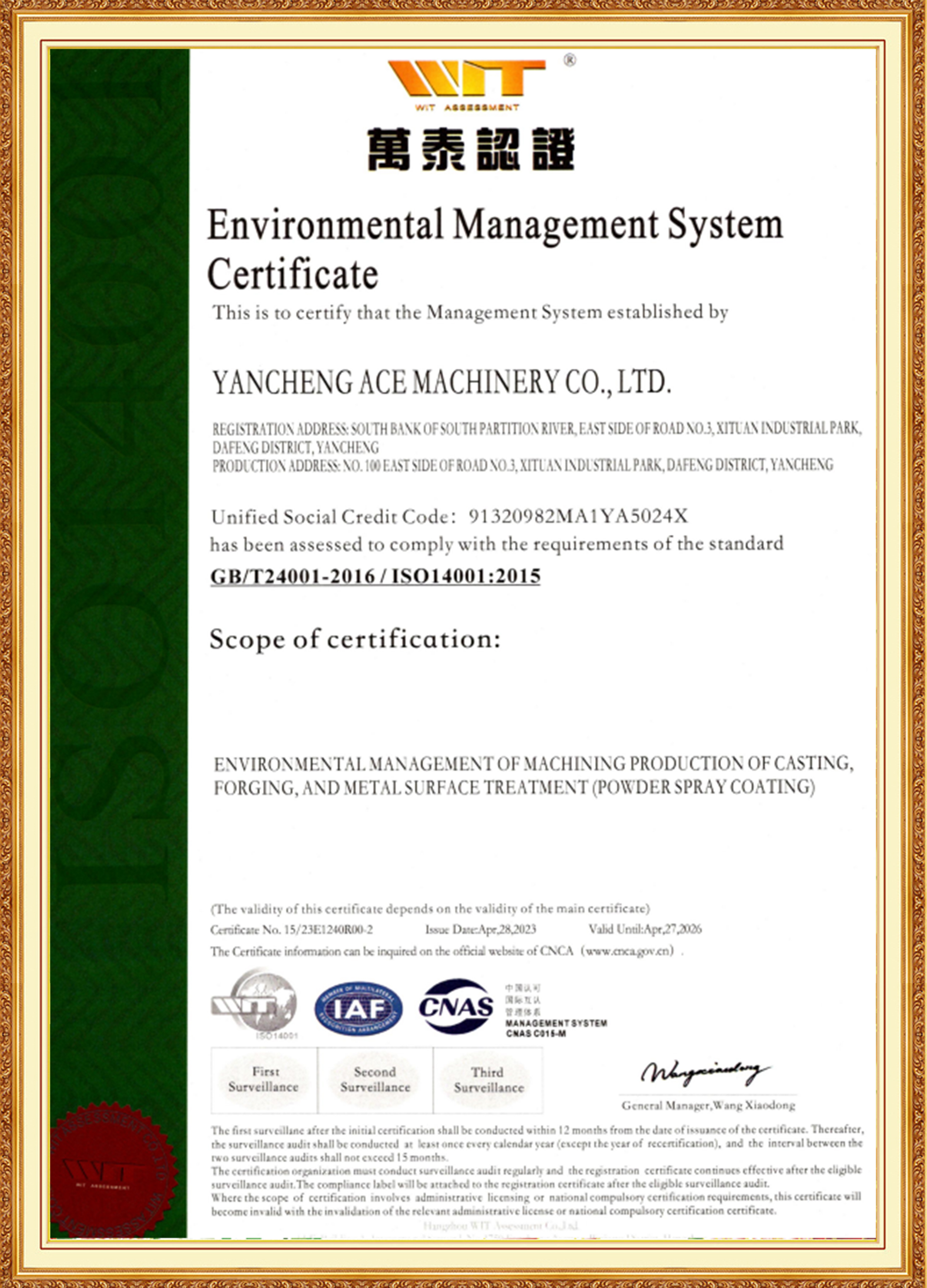
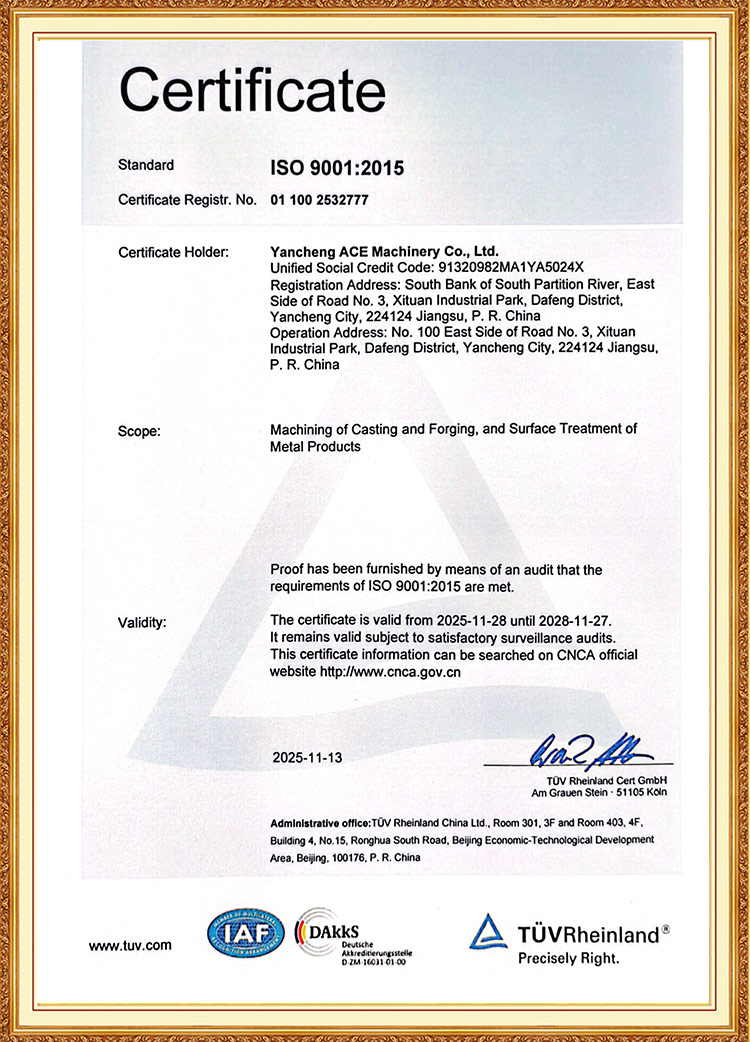
ACE-Gruppe wird von einem Managementteam aus jungen Schlüsselmitgliedern unterstützt, die über Erfahrung in den Branchen Werkstoffe, Wärmebehandlung, Bearbeitung und Oberflächenbehandlung verfügen. Sie sind mit internationalen und nationalen Standards bestens vertraut, Pionierarbeit leistend und der Innovation verpflichtet. Die Tochtergesellschaft ACE Machinery hat die Zertifizierung des Qualitätsmanagementsystems ISO 9001 des TÜV Rheinland sowie die Systemzertifizierungen ISO 14001, 45001 und 50001 bestanden. Es gilt als spezialisiertes, raffiniertes, einzigartiges und innovatives Unternehmen, als nationales High-Tech-Unternehmen und verfügt über ein Unternehmenskreditrating der Stufe 3A.
Die Gruppe stützt sich auf integrierte MES- und ERP-Managementsysteme, die Integration von Informatisierung und Industrialisierung, Daten-Cloud-Speicherung und strebt den Aufbau eines modernen, energieeffizienten Unternehmens an. Sie unterhält ein umfassendes Inspektionssystem. Das Unternehmen verfügt über Inspektionswerkzeuge, zerstörungsfreie Prüfgeräte und qualifiziertes Personal und führt strenge Kontrollen von der inneren Materialqualität bis hin zu Aussehen und Abmessungen durch. Alle ausgehenden Produkte werden einer 100-prozentigen Prüfung unterzogen. Dies entspricht der Geschäftsphilosophie, 100-prozentig qualifizierte Ausgangsprodukte anzustreben und keine Kundenbeschwerden zu beanstanden. Es wird ein CNAS-Standardlabor eingerichtet, das wissenschaftliche Testunterstützung für die Qualitätskontrolle während der Produktion und der technologischen Forschung und Entwicklung bietet und so die Produktqualität und technologische Innovation verbessert.
Auch in Zukunft wird die ACE Group die technischen Vorteile und industriellen Synergien ihrer Tochtergesellschaften nutzen. Durch standardisierte Produktion, spezialisierte Technologie, integrierte Dienstleistungen und ein strenges Qualitätskontrollsystem ist das Unternehmen bestrebt, effiziente und zuverlässige industrielle Fertigungslösungen für globale Kunden bereitzustellen und sich stetig zu einem führenden umfassenden Fertigungsdienstleister der Branche zu entwickeln.
Die Hauptwelle eines 12-Tonnen-Kegelbrechers beginnt als 18-Tonnen-Barren und die erste Entscheidung, vor der ein Käufer steht, ist nicht die Bearbeitungstoleranz, sondern die Art und Weise, wie das Metall geformt wird. Freiformschmiedestücke lösen dieses Problem für die meisten großen Teile mit geringem Volumen ...
View MoreEin geschmiedeter Ventildeckel erreicht die Endkontrolle mit einer Wandstärke von 14 mm, verteilt auf einen Abschnitt von 90 mm, das zusammengebaute Gehäuse besteht einen hydrostatischen Test am Flanschübergang nicht und der Zeitplan verschiebt sich um sechs Wochen. Die Zeichnung war korrekt, der Rollplan jedoch ...
View MoreEine Werft ersetzte einmal innerhalb von sechs Jahren zwei Propellerwellen aus Kohlenstoffstahl, weil das Schiff in einem chloridreichen Hafen festmachte, an den der ursprüngliche Entwurf nie gedacht hatte. Die Lösung, ein Schmiedeteil aus einer Nickellegierung, ist seitdem im Einsatz. Die Lektion gilt weithin: S...
View More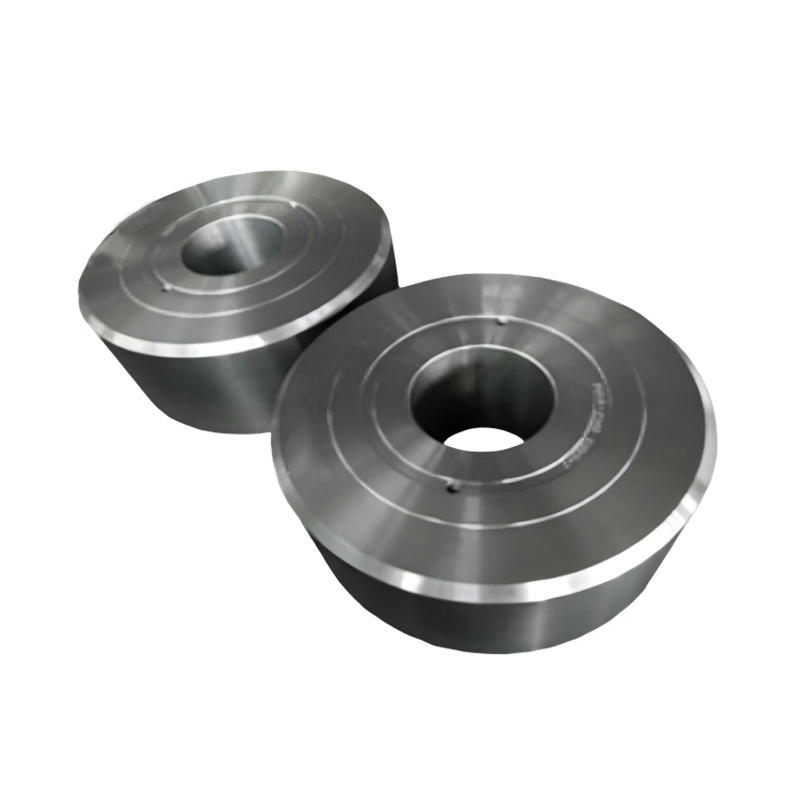
| Welding Method | Core Characteristics | Application Scenarios |
|---|---|---|
| Shielded Metal Arc Welding (SMAW) | Simple equipment, flexible operation; welding electrodes serve as both electrode and filler material, relying on manual operation | Maintenance, small-batch production, on-site welding of steel structures |
| Gas Metal Arc Welding (GMAW/MIG) & Gas Tungsten Arc Welding (GTAW/TIG) | Argon, carbon dioxide and other gases are used to isolate air and prevent weld oxidation; MIG welding offers high efficiency, while TIG welding ensures superior weld quality | MIG Welding: Automotive body panels, aluminum alloy components; TIG Welding: Stainless steel, precision parts |
| Submerged Arc Welding (SAW) | The electric arc burns under a layer of flux, resulting in good weld formation, high efficiency and no arc light pollution | Batch welding of thick steel plates, e.g., ship hulls, pressure vessels |
| Plasma Arc Welding (PAW) | Uses high-temperature plasma arc with high energy density, capable of welding thinner or thicker workpieces | Thin-walled components in aerospace, welding of special metals |
Visual Inspection: Checks weld formation, dimensions and surface defects (e.g., porosity, cracks, undercut) with the naked eye or with the help of a magnifying glass.
Electric Shock Protection: Welding equipment must be grounded, and operators need to wear insulating gloves and shoes.
Q1: Why are some metals (e.g., Aluminum) harder to weld than steel?
A: Aluminum has high thermal conductivity and rapid oxidation. It dissipates heat so quickly that forming a stable molten pool is difficult. Additionally, the aluminum oxide layer ($Al_2O_3$) has a melting point of over 2050°C, much higher than the metal itself (660°C). This usually requires AC TIG or specialized pulse MIG welding.
Q2: What is the Heat Affected Zone (HAZ) and why is it critical?
A: The HAZ is the area of base metal not melted, but whose microstructure has been altered by heat. This area can become brittle or lose strength due to the thermal cycle. Most structural failures, such as cracks, occur within the HAZ.
Q3: How is welding distortion caused and how can it be prevented?
A: Distortion is caused by uneven thermal expansion and contraction. Prevention methods include:
Pre-setting: Angling the parts in the opposite direction before welding.
Symmetric Welding: Welding from the center outward or in a balanced sequence.
Reducing Heat Input: Using high-energy-density processes like Laser welding.
Q4: Why is post-heating or "Hydrogen Release" necessary?
A: Hydrogen atoms can cause delayed cracking in the weld. Post-heating allows hydrogen to diffuse out of the metal, which is crucial for high-strength steels and thick plates.
Q5: Can robotic welding fully replace manual welding?
A: While robots excel in high-volume, standardized production (e.g., automotive), human welders remain irreplaceable for fieldwork, complex spatial joints, one-off custom jobs, and tasks requiring real-time sensory adjustment.
